Caboolture sits on reactive clay that expands when wet and shrinks when dry, sometimes by 20% or more. Underground pipes get squeezed during wet phases and left unsupported during dry ones. Old clay sewer and galvanised water pipes fail first. Camera inspections can catch the damage early; and pipe relining usually fixes it without digging up the yard.
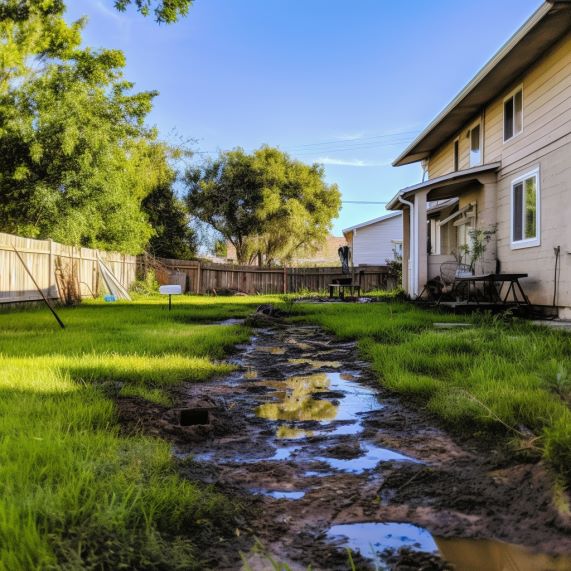
You might have noticed a wet patch in the yard that wasn’t there last summer. Or a drain that keeps blocking no matter how many times it’s cleared. Or a soft spot in the lawn that wasn’t there before.
These aren’t random maintenance issues. In Caboolture, Morayfield, and Upper Caboolture, they’re often symptoms of the same underlying problem, reactive clay soil that’s been working against your underground pipes for years.
By the time signs appear at the surface, the damage underground has usually been building for a long time.
How The Clay Soil Cycle Damages Pipes
Caboolture sits on highly reactive clay. It absorbs water and swells during wet weather, sometimes expanding by 20% or more. When dry conditions return, it contracts and pulls away from anything in contact with it.
For underground pipes, that means a constant cycle of compression and abandonment.
The Wet Phase
When heavy rain hits, and Caboolture gets plenty of it, the clay absorbs water and expands. This puts crushing pressure on pipes from every direction. Joints get pushed together or forced apart. Rigid pipe materials crack under the load.
The Dry Phase
When the ground dries out, the clay contracts and pulls away from the pipes. This creates voids and unsupported gaps. Without that soil holding them in position, pipes sag, shift at joints, and develop bellies where water and sediment collect.
The Rinse and Repeat Cycle
This isn’t a one-off event. The expansion and contraction happens every time the weather shifts, dozens of times a year in Caboolture’s climate. Each cycle puts new stress on the pipe. Each cycle opens existing cracks a little wider.
Southeast Queensland swings between extended dry periods and intense wet seasons. After a long dry spell, the clay has shrunk significantly. When the rain arrives, the soil swells rapidly, and pipes that were sitting in loose, cracked ground suddenly absorb massive ground pressure all at once.
Which Pipes Are Most At Risk
Clay Sewer Pipes
Old clay sewer pipes are among the first to fail. They’re brittle, heavy, and connected with mortar joints that have no give. Homes built before the 1970s in Caboolture and Morayfield often still have clay sewer pipes underground.
Galvanised Steel Water Pipes
Common in homes built before 1985. Already weakened by internal corrosion, they crack easily when the clay shifts around them. These pipes are usually on borrowed time in reactive soil.
Concrete Stormwater Pipes
Older concrete stormwater systems handle compression reasonably well but crack at joints when ground movement pulls them apart. Once a joint opens, root intrusion is almost guaranteed.
PVC Pipes
Modern PVC handles ground movement better because it has some flexibility. But severe movement can still separate joints, especially where backfill was rushed or done with the wrong material during installation.
Copper Water Pipes
More flexible than galvanised steel but not immune. Repeated bending stress at connection points leads to pinhole leaks over time in homes where clay movement is significant.
Signs Of Underground Pipe Damage
If you’re seeing any of these on your property, there’s a reasonable chance your underground pipes are already compromised:
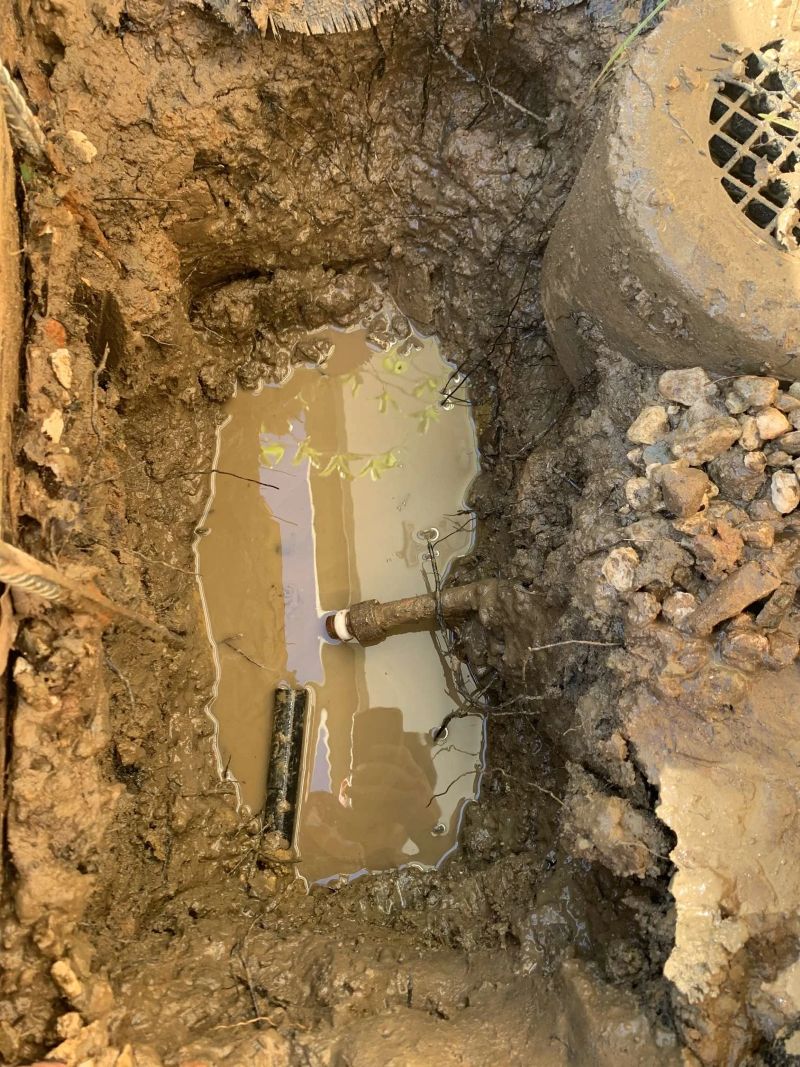
- Wet patches in the yard during dry weather, water leaking from a broken pipe saturates the soil above it
- Sinkholes or soft spots in the lawn, soil washing into a broken pipe creates a void underground
- Slow drains or recurring blockages, cracked, shifted, or belly-shaped pipes trap debris and roots at the damage point
- Foul smells in the yard, a cracked sewer pipe leaks sewage into the surrounding soil
- Trees or grass growing unusually fast in one spot, plants are drawing on moisture and nutrients from a leaking pipe
- Cracks in your slab or foundation, if clay movement is affecting your pipes, it’s affecting your footings too
Two or more of these together is a strong signal. Book a camera inspection before guessing.
How We Find The Damage
CCTV Drain Camera Inspection
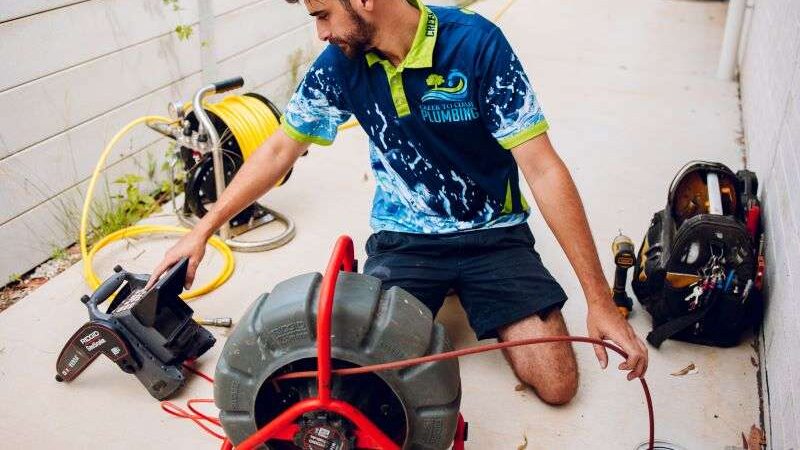
A camera travels through the pipe and records the condition in real time. We see cracks, breaks, root intrusion, displaced joints, sediment buildup, and collapsed sections, exactly where they are, without any excavation.
Leak Detection
For water supply pipes, we use acoustic and thermal detection equipment to locate leaks underground without digging. It pinpoints the source so we know exactly where to focus.
Property Assessment
We look at the whole picture, soil conditions across the site, tree locations, pipe materials, and property layout, to understand what caused the damage and identify where the next problem is likely to develop.
How We Fix It
Hydro Jetting
High-pressure water jetting clears roots, sediment, and debris from damaged pipes to restore flow. It’s usually the first step before a camera inspection so we’re looking at a clean pipe.
Pipe Relining
The go-to solution for cracked and root-invaded pipes in clay soil. A flexible resin liner is inserted into the damaged pipe and cured in place. No excavation required. The finished liner is jointless, root-resistant, and rated for 50+ years. Your yard, driveway, and gardens stay intact.
French Drains And Trench Drains
French drains divert groundwater away from pipe corridors, reducing the saturation pressure that drives the wet-dry cycle. Trench drains capture surface runoff before it soaks into the soil around underground pipes. Both are long-term ways to reduce future ground movement.
Excavation And Replacement
For fully collapsed pipes where relining isn’t possible, we excavate and replace with new PVC bedded on sand, not clay, to reduce ground movement against the new pipe.
Don’t Wait For A Sewer Collapse
Underground pipe damage in reactive clay soil is progressive. It doesn’t stabilise on its own, it only gets worse. A small crack this year is a collapsed pipe in a few years. Roots that have found a gap will grow until they completely block the line.
The cheapest fix is always the earliest fix. A camera inspection tells you exactly what’s happening underground so you can plan repairs on your terms, not in response to an emergency.
Creek to Coast Plumbing is a licensed plumbing contractor based in Morayfield, QBCC Licence 1199436.
You can verify our licence on the QBCC public register before booking.
Call 1300 793 962 or contact us to book an underground pipe inspection.
Frequently Asked Questions
Can I prevent clay soil from damaging my pipes?
You can reduce the risk but not eliminate it entirely. Consistent watering around the house during dry spells reduces the shrinkage cycle. Tree management keeps root pressure off pipes. Proper drainage reduces soil saturation. But ultimately, pipes in reactive clay soil need monitoring, regular camera inspections catch problems early.
How much does it cost to fix pipes damaged by clay soil?
It depends on the extent of damage and the repair method. Hydro jetting to clear a blockage starts from around $350. Pipe relining for a damaged section is typically from $4,000. Full excavation and replacement for a collapsed pipe can run from $8,000 or more depending on depth, length, and access. We provide exact pricing after a camera inspection.
Is pipe relining as good as a new pipe?
For most situations, yes. A relined pipe has a smooth, jointless interior that actually flows better than the original pipe. The resin liner is resistant to root intrusion and corrosion. It’s rated for 50+ years. The main advantage over replacement is that your yard, driveway, and gardens stay intact.
How do I know if my property has reactive clay soil?
Caboolture, Morayfield, Upper Caboolture, and most of the Moreton Bay region sit on reactive clay. Visual signs include deep cracks in the soil during dry periods, sticky clay when wet, and uneven ground levels between seasons. If your house was built with special footings (deeper, reinforced), the builder already knew the soil was reactive.
When This Article Isn’t For You
- You’re outside the Moreton Bay region, different soil, different solutions. We cover Caboolture, Burpengary, Morayfield, Bribie Island, Narangba and surrounding suburbs only.
- You want to DIY the pipe work. Underground sanitary plumbing must be done by a licensed plumber in QLD.
- You’re after the cheapest patch with no inspection. We won’t dig blind, camera inspection first, then a proper plan.

Our Services
Get A Quote
Contact us today for a free, no-obligation quote on your plumbing needs.