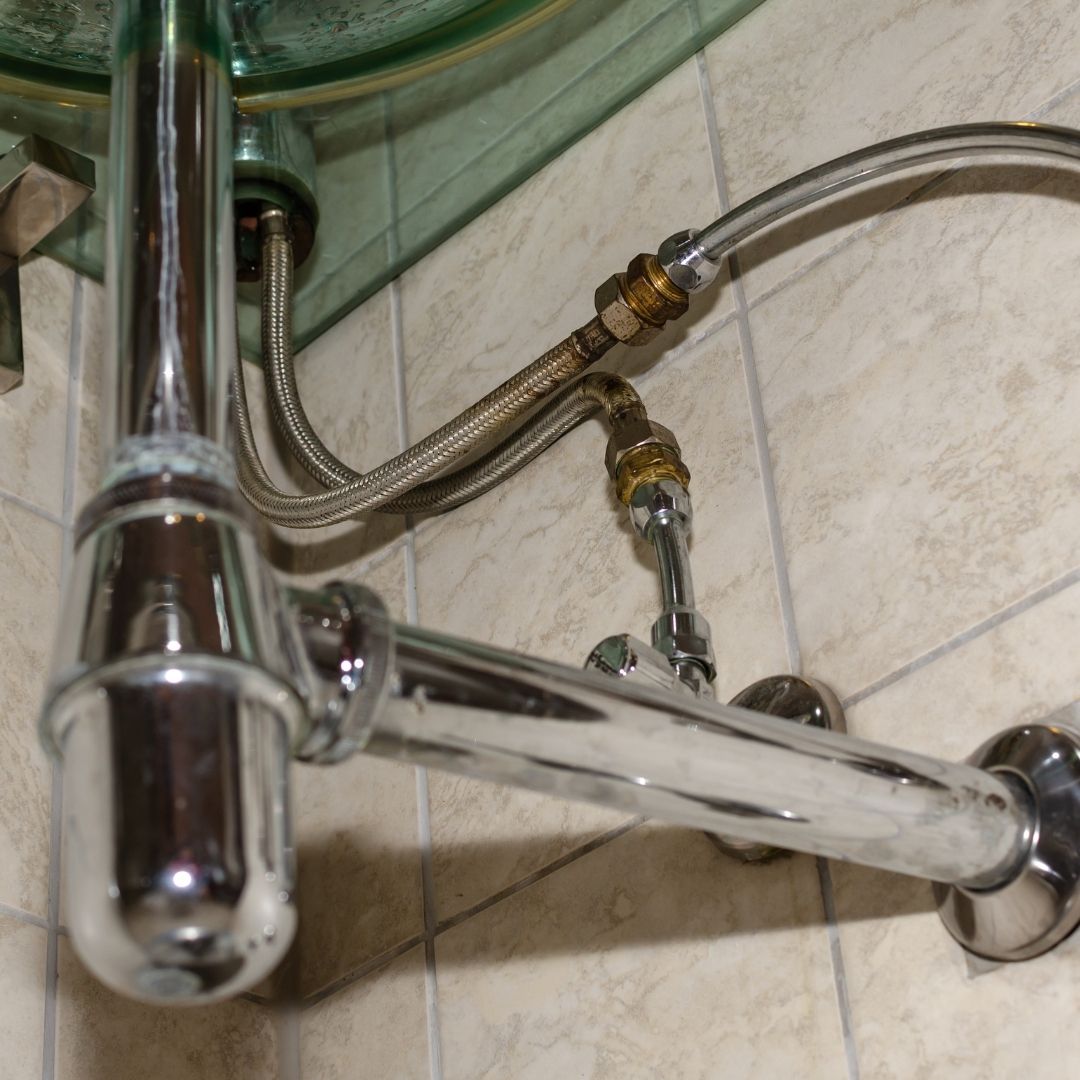
There’s a ticking time bomb under almost every sink in your house, and most people don’t even know it’s there. Braided flexi hoses, the shiny metal hoses that connect your taps, toilets, dishwasher, and washing machine to the water supply, are the single biggest cause of internal water damage in Australian homes.
When one bursts, it dumps water at mains pressure into your house. We’re talking thousands of litres per hour. It can happen while you’re at work, on holiday, or asleep. By the time you notice, the damage is done, flooring ruined, walls soaked, cabinetry destroyed, and an insurance claim that might not cover everything.
Where Are The Flexi Hoses In Your Home?
Most homes in Caboolture have flexi hoses in multiple locations:
- Kitchen sink: Two hoses (hot and cold) under the sink connecting the tap to the wall outlets
- Bathroom vanity: Two hoses per basin
- Toilet cistern: One hose connecting the cistern to the wall outlet
- Laundry: Hoses connecting the washing machine and laundry taps
- Dishwasher: One or two hoses connecting to the water supply under the kitchen sink
A typical three-bedroom Caboolture home has 10 to 15 flexi hoses. Every single one can fail.
Why Flexi Hoses Fail
These hoses are designed with a rubber inner tube wrapped in a braided stainless steel outer layer. The braid gives the hose its strength. When the braid corrodes or weakens, the rubber tube underneath has nothing holding it together, and it ruptures under mains pressure.
- Age: The biggest factor. Flexi hoses have a recommended lifespan of 5 years. After that, the risk of failure increases significantly. Most people install them and forget they exist.
- Chlorine and chemicals: Cleaning products, bleach, and even the chlorine in tap water gradually attack the rubber and braiding from the inside. Under a kitchen sink where cleaning products are stored, the fumes accelerate corrosion.
- Heat: Hot water hoses deteriorate faster than cold. The heat softens the rubber and stresses the braid at connection points.
- Poor installation: Hoses that are kinked, stretched too tight, or cross-threaded at the connection point fail earlier. Overtightening crushes the fitting and weakens the seal.
- Water pressure: High water pressure puts more stress on the hose and fittings. If your water pressure is above 500kPa, you should have a pressure limiting valve installed.
How To Check Your Flexi Hoses
You can do a basic check yourself. Look under every sink, behind every toilet, and at the laundry connections.
Signs of trouble:
- Bulging or swelling in the hose: The rubber is pushing through gaps in the corroded braid. Failure is imminent.
- Rust stains or discolouration on the braid: The stainless steel is corroding. Replace immediately.
- Moisture or dripping at the connections: The fitting seal is failing. Tighten or replace.
- Kinks or tight bends: Creates a weak point where the hose will eventually split.
- No date stamp visible: If you don’t know when the hoses were installed, assume they need replacing.
Check every hose. It takes five minutes and it could save you from a $50,000 insurance claim.
Replace Every 5 Years, No Exceptions
This isn’t a suggestion. Insurance companies, manufacturers, and every licensed plumber in Australia recommend replacing flexi hoses every 5 years. Some insurers now specifically exclude flexi hose damage if the hoses are past their recommended lifespan.
We replace flexi hoses as part of our maintenance plumbing service. We check every connection, replace aged hoses with quality fittings, and make sure nothing is kinked, overtightened, or under stress.
The cost to replace all flexi hoses in a typical home is a fraction of what you’d pay for flood damage repairs. It’s cheap insurance.
Insurance Implications
This is where it gets serious. Many home insurance policies now include clauses about flexi hose maintenance. If your insurer determines that the hose was past its recommended lifespan or showed signs of wear, they may reduce or deny your claim.
Some policies require evidence of regular plumbing maintenance. Having a plumber inspect and replace flexi hoses on a 5-year cycle gives you documentation that you maintained the property properly.
We provide a written record of every flexi hose replacement including date, location, and hose specifications. Keep it with your insurance documents.
What To Do If A Flexi Hose Bursts
- Turn off the water at the mains immediately: The main shutoff valve is usually at your water meter near the front boundary. Turn it clockwise to close. Every member of your household should know where this is.
- Mop up standing water: The faster you remove water, the less damage soaks in.
- Open doors and windows: Start the drying process.
- Don’t touch electrical outlets or appliances that are wet: Water and electricity are a lethal combination.
- Call your insurer: Document everything with photos before you start cleaning up.
- Call us: We’ll isolate the burst hose, replace it, and check the rest of the house for other hoses that might be close to failing.
Frequently Asked Questions
How Long Do Flexi Hoses Last?
The recommended lifespan is 5 years from the date of manufacture, not from when they were installed. Most hoses have a date stamp on the fitting. If there’s no date visible or the hose is more than 5 years old, replace it. In Caboolture homes with higher water pressure or hard water, they may deteriorate faster.
How Much Water Can A Burst Flexi Hose Release?
A burst flexi hose at mains pressure can release approximately 1,500 litres per hour. If it bursts while you’re at work for 8 hours, that’s 12,000 litres of water flooding your home. The damage is catastrophic, we’ve seen homes where every room was affected from a single hose failure under a bathroom vanity.
Will My Insurance Cover A Burst Flexi Hose?
It depends on your policy and the age of the hose. Many insurers now have specific conditions around flexi hose maintenance. If the hose was within its recommended lifespan and properly maintained, most policies cover the water damage. If the hose was old or showed visible signs of wear, the insurer may reduce or deny the claim. Check your policy.
Can I Replace Flexi Hoses Myself?
While it’s technically possible for a handy homeowner to replace flexi hoses, we recommend using a licensed plumber. Incorrect installation, overtightening, cross-threading, or kinking, is one of the main causes of premature failure. A plumber also checks water pressure, isolation valves, and other connection points during the replacement.
Are There Alternatives To Braided Flexi Hoses?
Yes. Copper or chrome-plated brass connectors are more durable but less flexible. Watermarked polymer hoses with a longer lifespan are also available. We can advise on the best option for each connection point in your home based on access, water pressure, and exposure to heat or chemicals.
Don’t Wait For A Flood
If your flexi hoses are more than 5 years old, or you don’t know how old they are, book a check now. We inspect every hose in the house, replace anything that’s aged or showing wear, and give you peace of mind.
Call 1300 793 962 or contact us to book a flexi hose inspection.
What Others Are Reading:

Our Services
Get A Quote
Contact us today for a free, no-obligation quote on your plumbing needs.