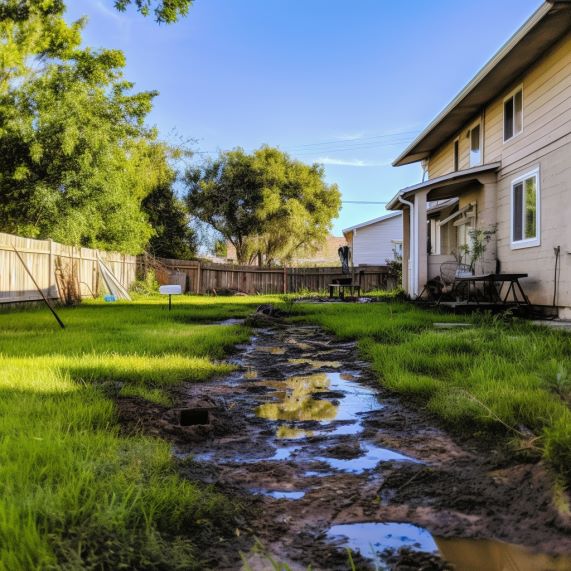
Every wet season, the same thing happens. It rains hard, water backs up, and your yard turns into a lake. The stormwater drains that are supposed to carry all that water away just can’t cope.
If you live in Caboolture, Morayfield, or Upper Caboolture, there’s a good chance clay soil is the reason your stormwater drains keep failing. It’s the most common drainage issue we deal with across the Moreton Bay region, and it gets worse every year if you don’t fix the underlying problem.
How Clay Soil Causes Stormwater Drain Blockages
Caboolture sits on reactive clay. When it rains, the clay expands and gets heavy. When it dries out, it shrinks and cracks. This constant movement puts pressure on underground stormwater pipes from every direction:
- Ground movement cracks pipes: As clay soil swells and contracts through wet and dry cycles, it shifts the ground around your stormwater pipes. Joints separate. Pipes crack. Once there’s a gap, soil washes in and starts blocking the flow.
- Tree roots find the cracks: Roots are drawn to moisture. Once a pipe cracks or a joint opens up, roots grow straight in. In Caboolture’s clay soil, trees work harder to find water during dry spells, which makes root intrusion even more aggressive. Fig trees, camphor laurels, and paperbarks are the worst offenders.
- Clay sediment builds up inside pipes: Fine clay particles wash into the stormwater system every time it rains. Over time, this sediment settles and hardens inside the pipes, reducing flow capacity. Eventually the pipe is half-blocked before the next storm even arrives.
- Aging pipe materials fail: Older Caboolture homes often have earthenware or concrete stormwater pipes. These materials deteriorate in clay soil. Earthenware cracks under pressure. Concrete pipes corrode from acidic soil conditions.
- Heavy rain overwhelms the system: When a summer storm dumps 50mm in an hour, even a healthy stormwater system struggles. A system that’s partially blocked with roots, sediment, and damaged pipes has no chance. The water backs up, floods the yard, and starts looking for other places to go, including under your house.
Signs Your Stormwater Drains Are Blocked
- Water pooling in the yard hours after rain stops: The water has nowhere to go because the pipes are restricted.
- Gurgling sounds from grates and pits: Air trapped behind a blockage bubbles up as water tries to pass through.
- Overflow from stormwater pits: Water coming up out of the pit instead of draining down means there’s a blockage downstream.
- Erosion around pipe connections: Water escaping through cracked joints washes away surrounding soil, creating sinkholes and soft spots in the lawn.
- Soggy patches that never dry: Underground water sitting in broken pipes saturates the soil around them.
How We Diagnose The Problem
We don’t guess. A CCTV drain camera inspection shows us exactly what’s happening inside your stormwater pipes. The camera travels through the pipe and records everything, root intrusion, cracks, collapsed sections, sediment buildup, and connection failures.
We know exactly where the problem is, what caused it, and the best way to fix it. No unnecessary digging. No trial and error.
How We Fix Blocked Stormwater Drains
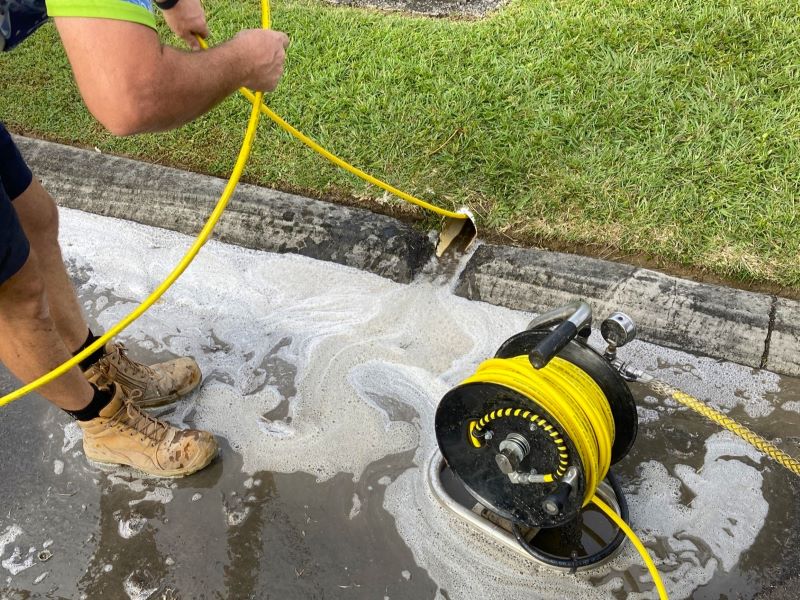
- Hydro jetting: A high-pressure water jet cuts through tree roots, clears sediment, and flushes debris out of the system. Most effective way to clear a blocked stormwater drain without damaging the pipe. First line of attack for most blockages.
- Pipe relining: For cracked or damaged pipes, we install a new pipe inside the old one. A resin-coated liner is inserted and cured in place. It seals cracks, blocks root entry points, and restores full flow, all without digging up your yard. Lasts 50+ years.
- Pipe replacement: If a section has completely collapsed, we excavate and replace it. In clay soil, we use PVC pipe with flexible joints that can handle ground movement better than rigid materials.
- French drain installation: For properties where surface water is the main issue, a French drain collects water underground and redirects it away from the house. Essential in Caboolture’s clay soil where surface water has nowhere to soak in.
- Spoon drain installation: Concrete channel drains that collect surface water and direct it to the stormwater system. Good for driveways, paths, and areas where water flows across hard surfaces.
- Stormwater pit upgrades: Older pits may be undersized for the volume of water your property needs to handle. We install larger pits with proper grates and connections to improve capacity.
Frequently Asked Questions
How Often Should Stormwater Drains Be Cleaned In Caboolture?
In clay soil areas, we recommend a hydro jet clean every 2 to 3 years, or annually if you have large trees near the stormwater lines. Tree roots grow back after clearing, so regular maintenance prevents full blockages. A camera inspection tells you exactly how often your system needs attention.
Can Tree Roots Be Permanently Removed From Stormwater Pipes?
Hydro jetting clears the roots, but they grow back unless the entry point is sealed. Pipe relining is the permanent fix, it creates a seamless barrier inside the pipe that roots can’t penetrate. If you’re clearing the same roots every year, relining will save you money long-term.
What’s The Difference Between Stormwater Drains And Sewer Drains?
Stormwater drains carry rainwater from your roof, yard, and driveway to the council stormwater system. Sewer drains carry wastewater from toilets, sinks, and showers to the treatment plant. They’re completely separate systems. Cross-connections between the two are illegal and can contaminate waterways.
Who Is Responsible For Blocked Stormwater Drains?
You’re responsible for all stormwater pipes and pits within your property boundary. Council maintains the stormwater system from your boundary connection to the main. If the blockage is on your property, it’s your responsibility to fix. We can check whether the issue is on your side or council’s side with a camera inspection.
Does Insurance Cover Stormwater Drain Repairs?
Most home insurance policies don’t cover gradual pipe deterioration or root intrusion, they consider it a maintenance issue. Storm damage may be covered if a sudden event caused the failure. Check your policy or call your insurer before starting repairs. We provide detailed camera footage and reports that help with insurance claims.
Stop The Damage Before It Gets Worse
Blocked stormwater drains don’t fix themselves. Every wet season, the roots grow thicker, the sediment gets deeper, and the cracks get wider. The longer you leave it, the more expensive the repair.
A stormwater camera inspection before storm season is the smartest money you’ll spend. We check the entire system, identify problems, and give you a clear plan to fix them.
Call 1300 793 962 or contact us to book an inspection.

Our Services
Get A Quote
Contact us today for a free, no-obligation quote on your plumbing needs.