5 Signs That You May Have a Blocked Toilet: A Guide from Creek to Coast Plumbing
A blocked toilet usually gives you warning signs before it overflows. The five to watch for are water that drains slowly or rises towards the rim, gurgling from the toilet or nearby drains, sewage smells, water coming back up through the shower or floor waste, and a toilet that keeps blocking after you clear it. Catching these early gives you time to stop flushing and call a plumber before wastewater ends up on the bathroom floor.
Blockages are common in our area. Unitywater, the water and sewerage provider for Moreton Bay, recorded 4,395 known wastewater blockages across its Moreton Bay, Sunshine Coast and Noosa service region in 2024/25, and it named wet wipes, paper towels, cotton tips, tissues, tampons and nappies as the key contributors.
- The early signs: slow drainage, gurgling, sewage smells, water backing up into other fixtures, and repeat blockages.
- What to do first: stop flushing, try a plunger once or twice, and check the overflow relief gully outside.
- What to flush: Unitywater says only pee, poo and toilet paper should go down the toilet.
- When to call: if the toilet will not clear, or the same toilet blocks again, the blockage is probably further down the drain.
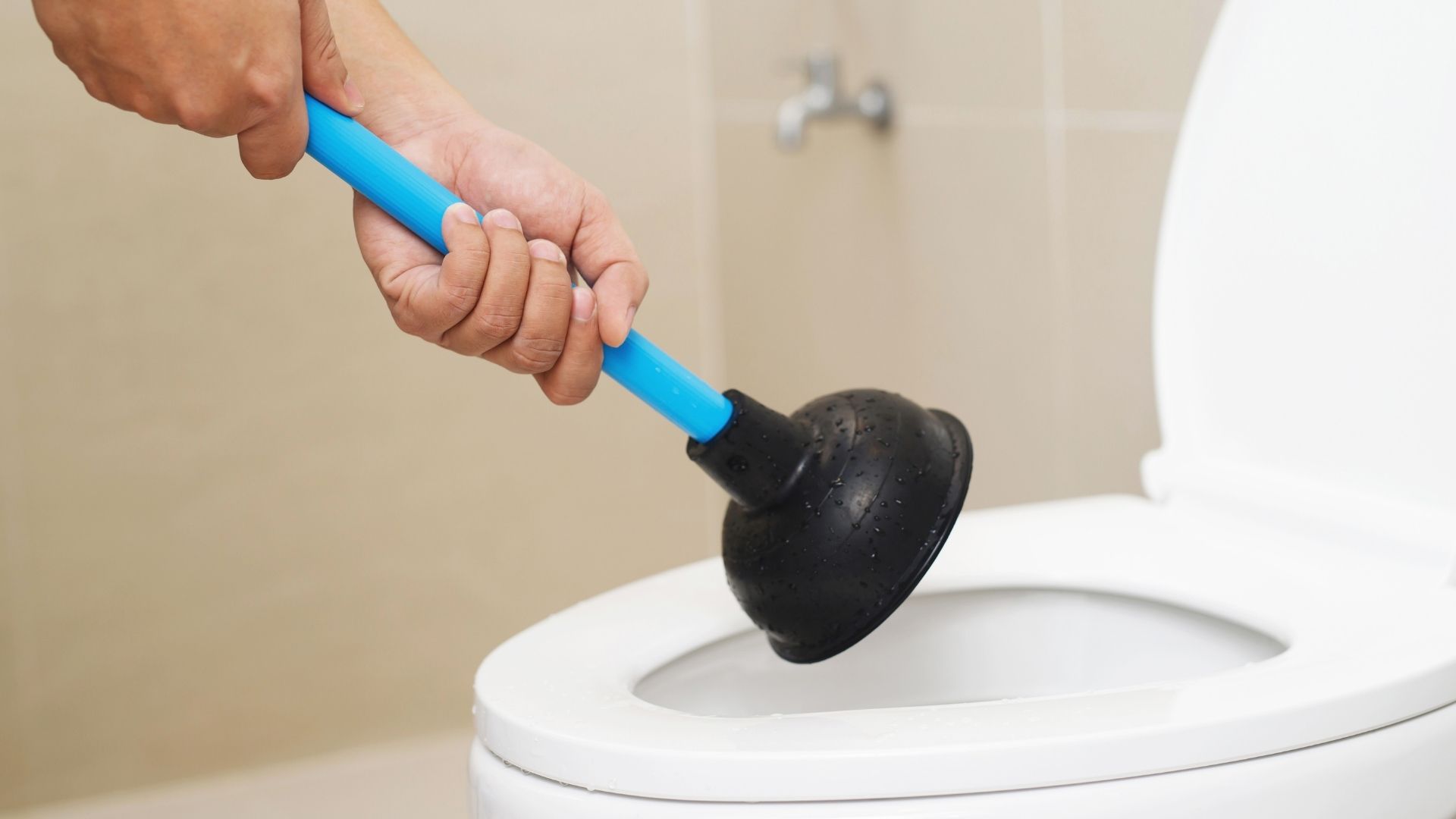
What Are the Signs of a Blocked Toilet?
If you are trying to work out whether your toilet is blocked or clogged, look for the five signs below. Some point to a blockage in the toilet itself, and others suggest the problem sits further down in the drain that the toilet shares with your shower, basin and floor waste.
1. Water Drains Slowly or Rises Towards the Rim
Slow drainage is the most obvious sign of a blocked toilet. If the water in the bowl takes longer than usual to go down after a flush, or it rises towards the rim before it slowly drops, something is restricting the flow. The cause is often too much toilet paper, an object that has been flushed by mistake, or a build-up of material in the pipe. If you keep flushing a toilet that is draining slowly, the bowl can overflow onto the bathroom floor.
2. Gurgling Sounds From the Toilet or Nearby Drains
A toilet that gurgles after a flush, or gurgles when other fixtures in the house drain, can have a partial blockage. You might hear it as bubbling in the bowl or in a nearby floor waste.
3. Sewage Smells Around the Toilet
A sewage smell that lingers around the toilet, or comes up from nearby drains, is another sign of a blocked drain. If the smell stays after you have cleaned the bowl and the floor around it, have a plumber check the drain.
4. Water Backing Up Into the Shower, Floor Waste or Sink
If water comes up through the shower drain or the bathroom floor waste when you flush the toilet, the blockage is probably in the drain that these fixtures share, not in the toilet itself. Grease from the kitchen, hair from the bathroom and sediment can build up in the main drain line over time. The toilet is often the first fixture to show symptoms because it sends the most water down the drain at once.
5. The Toilet Keeps Blocking Again
A toilet that blocks again soon after you have cleared it usually has a problem further down the line. If plunging fixes the toilet for a little while and then it blocks again, tree roots may have grown into the sewer pipe. We see this often in older homes across Caboolture and Morayfield that still have clay drainage pipes, and our guide to tree roots in blocked drains explains why pipes are open to root damage.
Sometimes a toilet that seems blocked is not blocked at all. A worn flush valve or the wrong water level in the cistern can give a weak flush that does not clear the bowl properly, and that can look like a blockage. A plumber can check the cistern and the flush mechanism and repair the part that has worn out.
What Should You Do When Your Toilet Is Blocked?
Stop flushing first. Each flush sends more water into a pipe that cannot drain, and Unitywater warns that the next flush can push wastewater back up through your floor drains. Then work through these steps:
- Try a plunger once or twice. If the toilet does not clear, stop plunging, because the blockage is probably deeper in the pipe.
- Check the overflow relief gully outside. This is the drain with a grate outside the house, inside your property boundary. Its grate is designed to lift when the drain overflows. If the grate has lifted or there is wastewater around it, the house drain is blocked and you need a plumber.
- Check your other fixtures. If the shower, basin or floor waste is also slow or backing up, tell your plumber, because it helps them work out where the blockage is.
- Call a licensed plumber. A blockage that a plunger cannot shift needs the right equipment to find it and clear it.
Our step by step guide to using a drain snake on a blocked drain covers what you can try at home and when it is time to stop.
Why the Overflow Relief Gully Matters
The overflow relief gully (ORG) is there to protect your home when the drain blocks. The Queensland Building and Construction Commission (QBCC) explains that the ORG provides relief when sewage surcharges, and that it sits outside the building where any overflow will be noticed. Under the plumbing standard AS/NZS 3500 Part 2, the top of the gully must be at least 150mm below the lowest fixture connected to the drain, including the floor waste, so that sewage overflows outside instead of coming into the house.
That only works if the grate can lift. Keep pot plants, pavers and anything else off the grate, and do not cover it. If landscaping or new paving has buried or raised the ORG, have a plumber look at it.
What Causes a Blocked Toilet?
Unitywater names unflushable items as the key contributors to blockages in its network, and it says the only things that are safe to flush are pee, poo and toilet paper. Toilet paper is made to break down in water within 30 seconds. Tissues and paper towel are made to be strong, and wet wipes often contain plastics, so none of them break down the way toilet paper does.
- Wipes and sanitary products: Wipes labelled flushable still do not break down. They catch on pipe joints and build up until the toilet backs up.
- Tree roots in the sewer line: If the toilet blocks repeatedly and plunging only fixes it for a while, roots may have grown into the sewer pipe. This is common in older homes with clay drainage pipes.
- Foreign objects: Children’s toys, cotton buds and too much toilet paper can lodge in the toilet trap or further down the pipe.
- Build-up in the main drain: Grease, hair and sediment narrow the pipe over time until the toilet starts to drain slowly.
- A weak flush: A worn valve or a low water level in the cistern can leave waste in the bowl, which looks like a blockage.
A small bin next to the toilet makes it easier for everyone in the house to put wipes and sanitary products in the bin instead of the toilet.
Who Is Responsible for a Blocked Sewer in Moreton Bay?
In Moreton Bay, the property owner is responsible for the private drain, and Unitywater is responsible for the sewer. Unitywater’s policy on clearing blocked private sewer pipes says the owner maintains the drain from the building up to the inspection opening, and Unitywater maintains its sewerage network up to and including the inspection opening on each property.
That means a blocked toilet is usually a job for your own plumber. If your plumber finds that the blockage is on Unitywater’s side of the inspection opening, they will stop and report it to Unitywater, because private plumbers are not allowed to clear blockages inside Unitywater’s network. Unitywater also responds directly when sewage has come inside a home, or when several properties in the same area are blocked at the same time.
How Creek to Coast Plumbing Clears a Blocked Toilet
We clear blocked toilets across Caboolture, Morayfield and the rest of Moreton Bay. When we arrive, we clear the immediate blockage with a plunger, an auger or a jetter, depending on how severe the blockage is. If the toilet keeps blocking or the blockage is further down the line, we run a CCTV camera through the drain to find the cause, and we use our hydro jetter to clear roots, grease and build-up from the sewer pipe.
If the problem is the toilet itself, we repair the cistern, flush valve, seals or connections. If the pan is cracked or the toilet is beyond repair, we supply and install a new one. If you have more than one slow drain in the house, our page on blocked drains in Caboolture explains how we find and clear blockages in the house drain.
Blocked Toilet Questions
Are flushable wipes safe to flush?
No. Wipes labelled flushable do not break down the way toilet paper does, and they catch on pipe joints until the toilet backs up. Unitywater names wet wipes as one of the key contributors to blockages in its network and says only pee, poo and toilet paper should be flushed. Put wipes in a bin next to the toilet instead.
Can a toilet look blocked when it is not?
Yes. A worn flush valve or the wrong water level in the cistern can give a weak flush that leaves waste in the bowl. It can look like a blockage even when the drain is clear. A plumber can check the cistern and the flush mechanism and repair the worn part.
What should I do if sewage comes up through the floor waste?
Stop using the toilet, shower and basins straight away so that no more water goes into the drain. Call a plumber to find and clear the blockage. Unitywater responds directly when sewage has come inside a home, so if the overflow is inside the house you can also call Unitywater on 1300 086 489.
Call a Blocked Toilet Plumber in Moreton Bay
If your toilet is draining slowly, gurgling or blocking again, call Creek to Coast Plumbing on 1300 793 962 or send us a message. Tell us which toilet is affected and what you have noticed, and we will explain the next steps and give you a quote before any work starts. We are available 24/7 for blocked toilets that cannot wait.


Our Services
Get A Quote
Contact us today for a free, no-obligation quote on your plumbing needs.